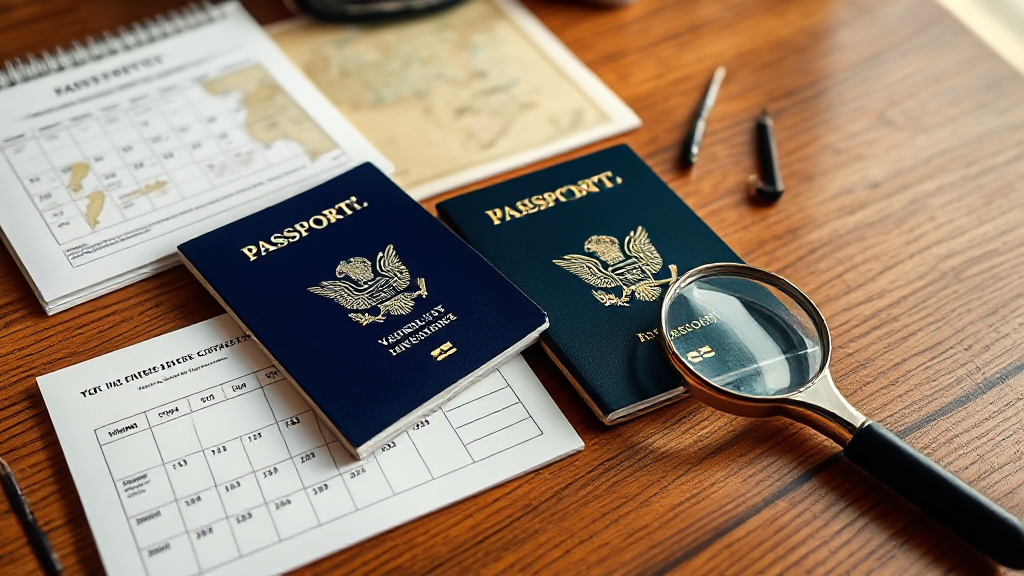
I Got a Vanuatu Passport When the Usual Route Failed: My Story
The short answer: you do not apply for a Vanuatu passport the way you apply for an ordinary one. There is no queue at a consulate, no interview slot to book, no points system to beat. You become a citizen of Vanuatu first, through the country’s citizenship by investment program, and the passport is issued afterward as proof of that citizenship. That single reframing is what finally got me unstuck after almost two years of chasing the wrong doors. If you want the clean version of the mechanics, this guide on how to get a Vanuatu passport lays out the stages properly. What follows is what actually happened to me, in order, including the parts that went sideways, because the written process and the lived process are not the same animal.
I am not an immigration lawyer and I am not selling anything. I am a person who needed a second passport for reasons that had nothing to do with tax tricks or fleeing anything, and who discovered that the usual routes were closed to me. This is the account I wish someone had handed me at the start.
Why the standard paths dead-ended for me
My situation was ordinary enough to be annoying. I was born in one country, had lived and worked in two others, and held a passport from a jurisdiction that had become progressively harder to travel on. Nothing dramatic. No legal trouble, no sanctions, no scandals. Just a growing pile of visa applications, embassy appointments, and the particular humiliation of being fingerprinted in a basement office in a city I did not live in so that I could attend a conference.
I tried the obvious things first. Residency by investment in a European country: possible, but the timeline ran into years and the physical presence requirements clashed with my work. Ancestry routes: I spent four months and several hundred dollars on archive requests before learning that the relevant records had been destroyed in a fire in the 1940s. A skilled-worker visa somewhere else: I did not have the kind of profile that wins those lotteries, and I was too old to pretend otherwise.
Each failure taught me the same lesson in a slightly different way. Most second-passport routes are built around something you either have or you do not: a grandparent from the right place, a scarce skill, a very large amount of capital, or a willingness to physically relocate for years. I had none of those in the quantities required. What I did have was a modest but real investment capacity and a need for something that could be completed without uprooting my life.
That is when Vanuatu moved from a footnote in my research to the center of it.
What the process actually looked like, stage by stage
The first thing I had to accept was that I was not buying a passport. I was applying to become a citizen of a country, and the passport was a downstream document. Once I stopped thinking of it as a transaction at a passport office, the whole thing became legible.
Stage one: confirming eligibility and choosing a program route. Vanuatu runs its citizenship by investment program under a legal framework that has been revised more than once, and there are different contribution categories depending on whether you apply as a single applicant, with a spouse, with children, or in some cases with extended family. I spent about three weeks just mapping the categories against my family structure and my budget. This is where most people, including me, first consider using an advisory resource rather than going it alone, because the category boundaries are not always obvious and a misread here costs months later.
Stage two: appointing an authorized agent. This is not optional. Vanuatu does not accept direct applications from individuals. You must work through an agent who is authorized to submit on your behalf. I interviewed three before choosing one. The differences were not in price alone, which was roughly comparable, but in how clearly each could explain the due diligence stage and what happens if something in your file raises a question. The agent I chose was the one who told me, unprompted, about a case that had gone wrong and why. That honesty was worth more than a discount.
Stage three: assembling documents. I have moved countries three times, which meant my paper trail was scattered across two continents and three languages. Police certificates from every country I had lived in for more than a year, birth certificates, marriage certificate, bank statements, source-of-funds documentation, professional references, and passport copies. Every non-English document needed certified translation. Every translation needed certification. Two of my police certificates expired while I was waiting for a third, which meant starting that part over. I keep a spreadsheet now, out of pure spite, listing every document with its issue date and expiry date. If you take one practical thing from this account, take that.
Stage four: the due diligence review. This is the part people underestimate. Vanuatu’s program includes a vetting process that examines your identity, your background, and the legitimacy of the funds you are contributing. It is not a formality. My file was clean, but the process still took longer than the initial estimate because one of my reference letters was deemed insufficiently detailed and had to be reissued. I was asked, politely but firmly, for additional documentation on the origin of a property sale that formed part of my contribution. I provided it, and the review continued. The lesson: assume you will be asked for more, and have it ready before you are asked.
Stage five: the contribution and the oath. Once the application is approved in principle, the contribution is made and the citizenship is granted. There is an oath or affirmation of allegiance, which in my case was handled remotely under supervision. I will be honest: this felt anticlimactic after eighteen months of work. I signed a document, spoke the words, and that was it. Citizenship, apparently, does not announce itself.
Stage six: the passport itself. After citizenship is granted, the passport application is submitted and the document is issued. This stage was, by comparison, almost boring. The passport arrived by courier. I opened the envelope at my kitchen table and sat there for a while not quite believing it was real.
Total elapsed time from first serious research to passport in hand: just under two years, with about seven months of that being my own document-gathering delays. People with cleaner paper trails and faster decisions do it faster. People who underestimate the due diligence stage do it slower.
What the passport actually gives you is visa-free or visa-on-arrival access to a substantial list of countries, which was the practical thing I needed. It is not a magic key to everywhere. I still need visas for some destinations, including some large ones. Anyone who tells you otherwise is selling something. But the difference between my old travel reality and my new one is the difference between planning trips around embassy calendars and just booking flights.
If you are at the research stage, the most useful thing you can do is read a structured explanation of the timeline and requirements before you talk to any agent, so that you can tell the difference between a realistic answer and a sales pitch. It also helps to understand how the Vanuatu program compares with other citizenship by investment options, because the right answer for me is not automatically the right answer for you. Some programs cost more but carry more travel access. Some are faster but have stricter residency expectations. Vanuatu’s appeal, in my case, was the combination of a workable contribution level and no requirement to physically relocate.
There is also a compliance dimension that I did not appreciate at the start. Investment migration is a regulated space, and the quality of your documentation is what determines whether your file moves smoothly or stalls. The people who struggle are rarely the ones with complicated lives. They are the ones who treated the paperwork as an afterthought.
The lessons I would hand to a friend
If a friend sat down across from me tomorrow and said they were considering this, here is what I would tell them, in the order I would say it.
First, stop looking for a passport office. There is not one. The passport is the last step of a citizenship process, not the first. Everything you read should be filtered through that understanding.
Second, budget for time, not just money. The contribution figure is the number everyone focuses on, but the real cost is the months of gathering, translating, certifying, and waiting. If you cannot commit to that, the money will not save you.
Third, treat your documents as if they will be challenged, because some of them will be. Order your police certificates as late as possible so they do not expire mid-process. Get your translations certified by someone your agent recognizes. Keep a single master list with dates.
Fourth, choose your agent on the quality of their answers, not the size of their discount. Ask them what happens if due diligence raises a question. Ask them how many applications they have had declined and why. The ones who answer directly are the ones you want.
Fifth, be honest in your application. The due diligence stage exists precisely to catch people who are not, and a declined application is not just a lost fee. It is a permanent mark on future applications elsewhere.
Sixth, manage your expectations about what the passport does. It expands your travel options meaningfully. It does not make you a citizen of the world. Know the visa-free list for your actual travel patterns before you commit, not after.
Seventh, and this is the one I keep coming back to: the usual method failing is not the end of the road. It is information. When the ancestry route collapsed and the residency route priced me out, I could have concluded that a second passport was simply not available to someone like me. Instead I concluded that I had been looking at the wrong category of solution. Vanuatu was not my first choice. It was my correct choice, and I only found it because the obvious doors closed.
I still have the spreadsheet. I still have the folder of certified translations. The passport sits in a drawer next to my original one, and every few months I take both out and look at them together, mostly to remind myself that the two years were real. If you are at the beginning of this, in the stage where everything looks like a wall, I would say this: the wall is usually a door you have not found yet. Read carefully, document thoroughly, ask direct questions, and give the process the time it actually requires rather than the time you wish it required. That is the whole of what I learned, and it was enough.