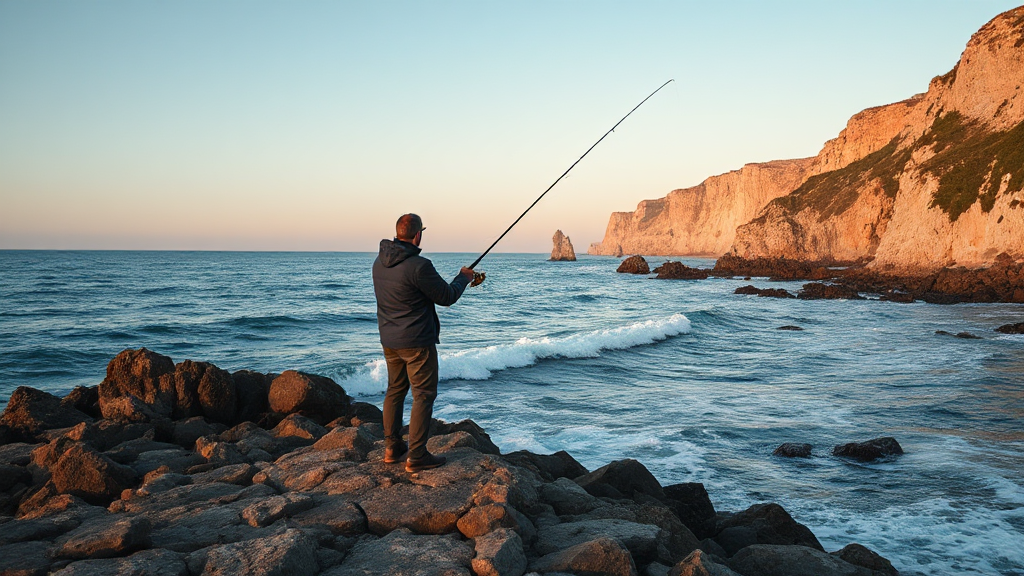
The Morning I Almost Fished Portugal Illegally: One Angler’s Path to the Rocks
The Atlantic hit the rocks below me with a sound like a slow, heavy door slamming somewhere deep underground. I had my rod already rigged, a bucket of sardines at my feet, and the pale light of a Portuguese dawn spreading across the water. Then a thought arrived, unwelcome and sharp: I had no idea whether I was actually allowed to be here. Somewhere between the airport, the rental car, and the promise of sea bass, I had completely forgotten to check the rules. I stood there with the line half-cast, feeling the absurdity of it, and rewound the whole trip in my head to figure out where I had gone wrong.
From a Winter Evening to a Plane Ticket
The decision started months earlier, on a cold night when I was scrolling through photos of the Algarve coast. Golden cliffs, hidden coves, water so blue it looked edited. I had fished since I was a kid, mostly freshwater, mostly small stuff, but the idea of casting into the open Atlantic from a Portuguese shore had been sitting in the back of my mind for years. That night I finally booked a flight. I told myself I would figure out the details later, which is the kind of sentence that always comes back to haunt you.
What I did not realise then was how much there is to learn about fishing in portugal. It is not just a matter of picking a beach and throwing a line. The country has a long, varied coastline, a strong local fishing culture, and a set of rules that apply to visiting anglers just as much as to residents. I arrived with enthusiasm and almost no preparation, which is a combination that rarely ends well.
The first few days were pure holiday. I walked the cliffs near Sagres, watched local fishermen haul in mackerel at dusk, and ate grilled sardines in a tiny restaurant where nobody spoke English and the menu was a chalkboard. Every evening I promised myself I would sort out the paperwork in the morning. Every morning I found something better to do. The sea was right there, patient and enormous, and it made the idea of bureaucracy feel almost insulting.
The Morning Everything Almost Went Wrong
On the fourth day I drove north to a rocky stretch I had spotted on a map. No crowds, no lifeguards, just a rough path down to the water. I rigged up in the dark, feeling like a proper angler at last, and that is when the question hit me. Was I supposed to have a licence? Did it matter that I was a tourist? Would anyone even check? I genuinely did not know, and the not-knowing made the whole scene feel fragile.
I sat on a rock and did what I should have done weeks earlier. I pulled out my phone and started reading. It turned out that recreational sea fishing in mainland Portugal is regulated, and that visitors are expected to hold a valid permit. The process, once I actually looked at it, was far less intimidating than I had imagined. There are services designed specifically to help visiting anglers sort this out, and some of them are remarkably quick. What had felt like a wall of red tape turned out to be a short form and a few minutes of attention.
That morning taught me something I have carried into every trip since. The difference between a stressful fishing holiday and a relaxed one is often just a small piece of preparation done in advance. Standing on those rocks, I finally understood why experienced travelling anglers treat the fishing license as part of the packing list, right next to the reels and the pliers.
Instead of casting that morning, I walked back to the car, found a café with decent wifi, and sorted everything out over a coffee. By the afternoon I was back on the same rocks, this time with a clear head and a legal line in the water. The difference in how the day felt was enormous. The fish did not care, of course. But I did.
What the Coast Taught Me About Doing It Properly
The rest of that trip unfolded the way I had hoped it would from the start. I fished the Algarve cliffs at first light, where the water was deep and the bites came fast. I tried the long sandy beaches of the west coast, learning to read the surf and cast beyond the breakers. I spent an evening on a harbour wall near Peniche, surrounded by locals who nodded at me with the quiet approval that only comes when you are clearly doing things the right way.
Portugal rewards anglers who pay attention. The Atlantic is powerful and unpredictable, and the coastline changes character every few kilometres. In the south you get warm water, rocky ledges, and species that feel almost Mediterranean. Further north, the sea is colder and rougher, and the fishing has a different rhythm entirely. What stays constant is the need to respect both the environment and the rules that protect it. That respect is not just legal box-ticking. It is part of what makes portugal fishing feel meaningful rather than merely convenient.
I also learned to talk to people. The old man who sold me bait in a village near Lagos told me more about local tides in ten minutes than any website had managed in an hour. The young couple fishing next to me on a Sunday explained which spots were worth the walk and which were not. Nobody asked to see my paperwork, but knowing it was in order meant I could relax and actually listen. Preparation, it turns out, is not the enemy of adventure. It is what allows adventure to happen without a knot in your stomach.
By the final week I had settled into a rhythm. Up before dawn, coffee from a thermos, a short drive to a spot I had chosen the night before, and hours of quiet casting while the sun climbed. I caught sea bass, mackerel, and a few things I could not identify and released carefully. None of it was record-breaking. All of it was exactly what I had come for.
On my last morning I stood on the same rocks where the trip had almost unravelled. The sea was calm, the light was soft, and my line went out clean and far. I thought about how close I had come to spending the whole holiday on the wrong side of a simple rule, and how easily that had been avoided once I stopped pretending the details did not matter. If you are planning your own trip, do the small thing early. Sort out your permit before you pack your rod, and let the coast do the rest. The waves will still be there when you arrive, and this time you will be ready for them.